

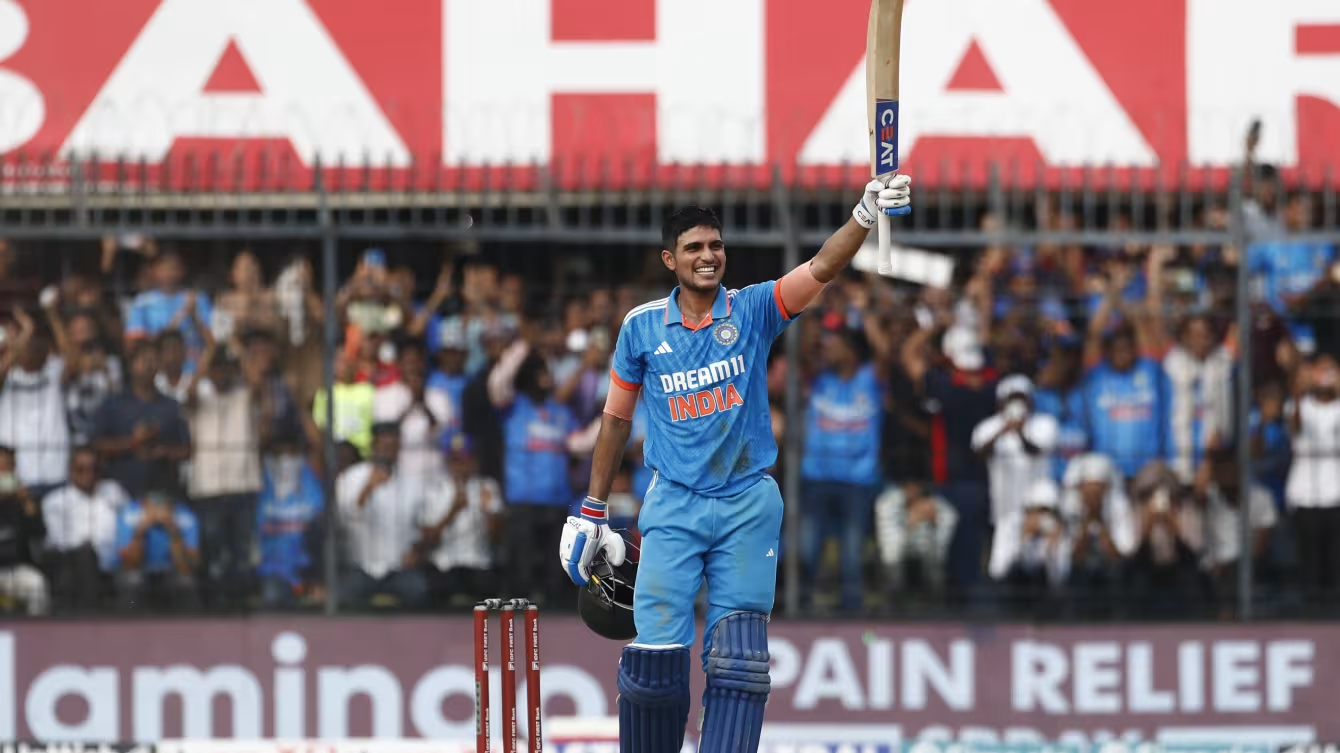
Shubman Gill occupies a difficult position in Indian cricket. He is no longer simply a prospect, yet much of his career is still discussed in terms of what he might become. His technique, early international achievements, leadership responsibilities, and place within a changing batting order have created expectations that extend beyond scoring runs. India increasingly needs him to become one of the players around whom the next cycle is built.
That expectation also reflects how audiences respond to uncertainty and potential. Interest often grows when the outcome is not settled, whether people are following a young batter’s development or probability-based entertainment such as andar bahar live casino. With Gill, the central question is not whether he has enough talent for international cricket. His performances have already answered that. The question is whether he can convert that ability into sustained influence across formats and leadership roles.
Early Success Created a Different Standard
Gill entered senior cricket with expectations already attached to his name. His performances at youth level suggested a batter capable of succeeding against stronger attacks, while his technique appeared suited to longer innings.
His transition into international cricket reinforced that assessment. One of the defining moments came during India’s 2020–21 Test series in Australia. In the Brisbane Test, Gill scored 91 in the fourth innings as India pursued 328.
The innings mattered because of its context. India faced an attack operating in home conditions, and the series had placed pressure on a squad affected by injuries. Gill’s ability to score during the chase demonstrated that he could contribute when circumstances demanded more than technical promise.
Success that early can change how a player is judged. Development is no longer enough; progression becomes expected.
Why His Technique Attracts Attention
Gill’s batting is built around balance and timing rather than constant force. His ability to play through the off side gives him scoring options against pace, while his footwork allows him to attack fuller deliveries without excessive movement.
He can also score quickly without appearing to abandon his base technique.
That characteristic matters in modern cricket because players are required to change tempo across formats. Test batting may demand patience outside off stump. ODI cricket rewards control of an innings over several phases. T20 cricket can require immediate acceleration.
A batter capable of adjusting tempo without rebuilding his entire method has an advantage.
Gill’s challenge is maintaining that adaptability when bowlers identify patterns in his game. At international level, weaknesses are studied repeatedly. Long-term success depends on responding when opponents alter their lines, lengths, and field placements.
ODI Cricket Showed His Scoring Range
Gill’s ODI performances accelerated the discussion about his long-term role.
In January 2023, he scored 208 against New Zealand, becoming one of the youngest batters to make an ODI double century. The innings demonstrated more than endurance. Gill had to control the scoring rate across different stages before accelerating as the innings progressed.
This is important for India because ODI opening requires two skills that can conflict.
An opener must use fielding restrictions without exposing the middle order unnecessarily. At the same time, batting too cautiously can transfer pressure to later phases.
Gill’s ability to construct long innings while maintaining scoring options makes him suitable for this balance. His task is reproducing it consistently as opposition plans become more specific.
The Pressure of Following an Established Generation
Gill’s career also coincides with a transition in Indian cricket.
For years, India’s batting identity was associated with players such as Rohit Sharma and Virat Kohli. As senior players reduce their roles or leave formats, responsibility does not disappear. It moves to the next group.
This creates a different kind of pressure for Gill.
He is not merely competing for a place. He is increasingly expected to provide continuity between generations.
That means producing runs against leading attacks, adapting to conditions outside India, and contributing during tournament matches where one failure can influence an entire campaign.
Comparisons with previous stars are inevitable, but they can also distort analysis. Gill does not need to reproduce another player’s career. India needs him to develop a method that fits the next version of the team.
Leadership Changes the Evaluation
Leadership responsibilities add another dimension.
A player judged only as a batter can focus primarily on runs, technique, and decision-making at the crease. A leadership role introduces questions about tactics, communication, player management, and responsibility after defeats.
For Gill, leadership represents both an opportunity and a test.
It can accelerate his understanding of match situations because captains must think about the game from multiple perspectives. They consider bowling rotations, field placements, partnerships, conditions, and the strengths of teammates.
However, captaincy also increases workload. Gill must prevent leadership demands from disrupting the batting process that earned him responsibility in the first place.
Why Overseas Test Cricket Matters
If Gill is to become a central figure for India, performances in overseas Test conditions will remain an important measure.
Batting in England, Australia, South Africa, or New Zealand can require adjustments to movement, bounce, and shot selection. Techniques that produce runs on one surface may expose weaknesses on another.
Gill has already experienced both success and difficult periods outside India.
That variation is normal, but expectations around him mean every series becomes part of a larger evaluation. Can he adapt quickly enough? Can he convert starts? Can he produce an innings when conditions favor the bowlers?
Those questions matter because leading batters are ultimately expected to solve different problems rather than dominate only familiar ones.
Expectations Are About More Than Runs
The scale of expectation around Gill comes from the combination of age, skill, experience, and timing.
India is moving through a generational transition, and Gill has reached the stage of his career when potential must increasingly become responsibility.
Runs will remain the clearest measurement, but they are not the entire task. India needs players who can handle multiple formats, respond to tactical changes, perform abroad, and assume leadership when required.
Gill has already demonstrated that he possesses many of the tools needed for that role. What remains uncertain is the scale and consistency of what he will build with them.
That uncertainty explains why expectations are so high. Gill is not viewed simply as another talented batter. He represents one of India’s clearest opportunities to connect an era defined by established stars with the team that will follow them.
