

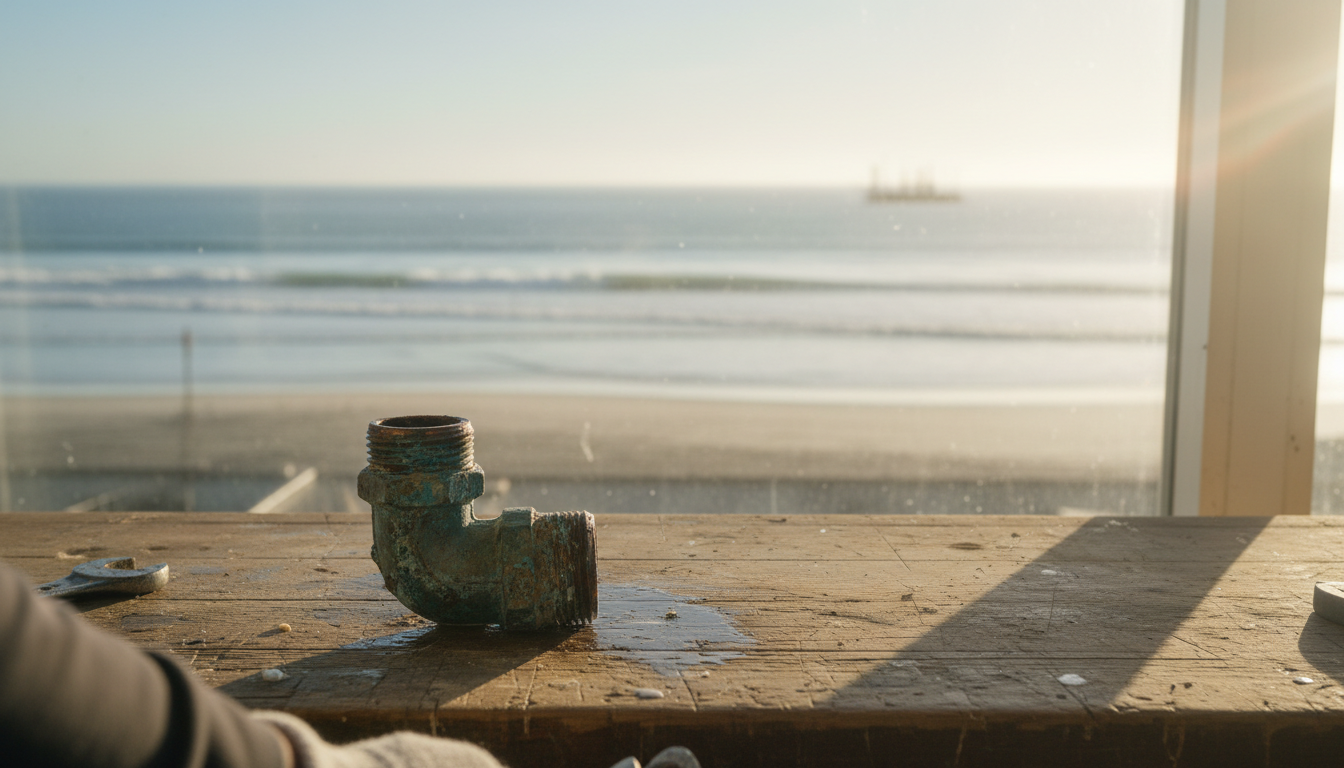
A pipe or fixture shows wear near the coast. The wear looks too great for the home’s age. Huntington Beach faces damp air from the coast. The same damp air reaches nearby Orange County neighborhoods. Metal on hose bibs, shutoff valves, fittings, and fixtures sits in that air. Normal daily use strains the metal.
Not every stain points to a failing pipe. You may decide an inspection makes sense. A search for an emergency plumber in Huntington Beach can help you. You can find a local business to contact. You can visit that business too. You should notice discoloration, moisture, or a pressure change returning. Salt air can add wear in the same places. Aging plumbing can add wear there too.
What Salt Air Does to Metal
Salt air still matters without reaching every pipe behind a wall. Metal parts may collect moisture from the air. Those parts sit in garages, patios, laundry areas, under sinks, and along exterior walls. That moisture can linger on fittings or valves.
The plumber looks past a rust mark. The plumber checks if the issue stays limited. A surface finish, a connection, or the fixture itself may be the issue.
Corrosion is a chemical reaction of a material with its surroundings. It is not mere dirt on metal. An orange stain is not corrosion. Water, oxygen, salt, humidity, and chemicals can contribute to metal deterioration. The explanation is in how corrosion actually forms. A stained fitting may be the visible part of a problem. Closer inspection is needed.
Why Age Compounds It
Age shifts the picture. Older plumbing had more time with water. Air contact lasted much longer. Household use lasted longer too. A pipe can look fine from the room side. Valves have worn in hidden spots. Fittings show wear in those spots. Connections show wear there too. Spots cover cabinets, wall openings, plus utility areas.
The Environmental Protection Agency cites lead corrosion. Plumbing materials containing lead can corrode. Homes built before 1986 more often contain older-era plumbing materials. EPA guidance on how aging plumbing materials break down applies here. This does not mean a Huntington Beach home has lead pipes. It supports taking older plumbing seriously. Conditions change.
Coastal air adds another source of exposure around visible metal. Inland homes may share layouts with coastal homes. Fittings in a coastal setting meet humidity plus salt. Valves in that setting meet the same pair. Normal wear from age hits at the same time.
Fixtures Worth Watching
Faucets and shutoff valves deserve attention. They contain metal parts and moving pieces. Regular water contact is common. Brass fixtures are a concern. Chrome-plated brass fixtures are a concern too. Concern rises as plumbing ages. Corrosion spots include the base and handle. Other spots include the supply connection and nearby wall.
A stained fixture is not only a cosmetic issue. A plumber separates finish buildup from a loose connection. The plumber separates a problem inside the fixture body. This step precedes any repair recommendation.
Exterior hose bibs also get overlooked. A stiff handle brings them to attention. Water around the connection after use does the same. Check the wall below the fixture as well. Recurring staining helps locate the moisture.
Some situations need 24/7 emergency availability. Plumbing by Tony offers emergency plumbing services in the Huntington Beach area. The issue can be urgent. The issue can simply be confusing. Use one process either way. Diagnose the problem before any repair. Finish the repair only after that step. Test the work last.
Signs Worth Paying Attention To
Plumbing trouble seldom bears a neat label. Small changes draw notice more often. Dish washing can reveal it. Tub filling can reveal it. Passing a utility area can show it. A fitting there has started to discolor.
Watch for changes such as:
- Moisture from pipes on wall, cabinet, or floor
- Discolored water at a fixture
- Weaker faucet or shower pressure
- Stains around a valve, fitting, or pipe connection
More than one cause can produce these signs. Test for a return of the change. Check if the place stays fixed. Watch for that appearance only with running water. Pass that pattern to the plumber.
A damp cabinet or stained wall does not prove corrosion alone. Repeated moisture near a metal connection needs a check. Do not clean the mark. Do not repaint over it.
What a Plumber Checks
A licensed plumber starts with diagnosis of the complaint. Repair comes later. The plumber asks about the issue location. The affected fixture gets a check. Nearby connections get checked too. The look covers corrosion. Active moisture gets checked as well. Pressure changes matter. Signs of trouble past the visible part also matter.
Exposed pipes, fittings, valves, and the surfaces around them may be inspected. Drain cleaning stands apart from hydro jetting. Sewer inspection is separate from slab leak detection. Each one fits a different finding. The plumber should identify the source first. Treating them as one problem is a mistake.
The plumber finds the source first. Then the plumber fixes the affected part. Sometimes the next repair is only explained. The inspection decides that step. Testing the fixture or connection comes last. Continued leakage gets a check. The plumber confirms water runs as expected.
What to Do Next
Coastal air doesn’t mean every older Huntington Beach home is headed for pipe trouble. It does mean exposed metal, aging fixtures, and recurring changes in water appearance or pressure deserve more attention than a passing stain that disappears after cleaning.
Start with what you can see and describe. Note where staining appears, whether pressure changed, and whether discoloration happens at a single fixture or throughout the home.
Call a licensed plumber when you notice recurring staining, a pressure change, or discolored water rather than waiting for the problem to grow.
